AKAWAN NEWSLETTER
Before leaving, let's stay in touch.
Once a month, receive practical insights from our AI and digital experts - covering use cases, real-world experiences, and trends - with no jargon, just useful ideas.
Your address remains confidential. You can unsubscribe at any time with a single click.
Why 80% of factory mergers verge on a digital crash

Why 80% of factory mergers border on an IT crash in 2026 (and how to escape it)
In an industrial landscape marked by record consolidation in 2025 and 2026, confirmed by economic outlook reports from GIFAS (Group of French Aeronautical and Space Industries), external growth strategies have become an absolute weapon. For Tier 1 and Tier 2 equipment manufacturers, advanced subcontractors (Aeronautics, Space, Defense, Automotive) or materials and testing specialists, acquiring production sites or design offices is the fastest way to gain recognition in the market and meet the frantic paces imposed by major contractors.
Yet, as soon as the champagne glasses are put away, operational reality hits hard. The group finds itself at the head of a digital "patchwork": a mosaic of tools where several competing ERPs, siloed PLM solutions, and obsolete quality management systems (QMS) coexist. Without a proactive and impactful upstream IT convergence strategy, the synergies promised to investors collapse, giving way to organizational silos that threaten overall profitability.
1. ERP, PLM, Quality: The incompatible trio that secretly sabotages the profitability of your corporate acquisitions
The lack of alignment between the three pillars of the industrial IT system does not just slow down the company: it actively paralyzes the value chain, a critical blind spot while the industry faces historic delivery targets.
ERP siloing: total operational opacity
Each acquired entity clings to its legacy ERP. The result? The group is flying blind. It is impossible to have a consolidated view of inventory, multi-site production capacities, or to optimize procurement. Planning processes (S&OP/MPS) shift to Excel files, creating total opacity and ruining the Supply Chain's agility in the face of major contractors' punctuality demands.
The break in the digital thread: production profitability at risk?
In high-precision engineering, digital continuity is a matter of survival. When PLM tools do not converge, central R&D and remote factories work on different plans. A crucial technical change (Engineering Change Order) approved at headquarters takes weeks to reach a subsidiary's production ERP. Result: obsolete parts are machined. Money goes straight down the drain in the form of costly scrap.
Quality fragmentation: the risk of non-compliance
In highly regulated sectors (EN 9100, IATF 16949 standards), a gap in traceability is equivalent to a business death sentence. The absence of a unified quality system turns the management of non-conformities and audits into an uphill battle. Control data is scattered across local servers or on paper, exposing the group to critical risks during customer or regulatory audits.
Faced with such danger, the urgency often drives a desire to standardize everything at once. Yet, this is precisely where the trap lies.
The technical assessment: Imposing a single ERP or PLM in "Big Bang" mode right after an acquisition is the best way to cause an operational stroke. It shuts down factories for months and destroys the exact value and agility you just purchased.
2. Bugs, scrap, and delivery delays: The painful truth about data chaos
To measure the extent of the damage, here is how system heterogeneity silently blocks the vital data flows of your production sites:
1. The lockup of Master Data (Items and Bill of Materials)
The major malfunction lies in the double, or even triple, manual data entry between the group's PLM and local ERPs, due to the lack of a common codification.
The cash impact on your business is immediate: database inconsistency makes it completely impossible to pool raw material purchases. Thus, you lose all the scale effect that the acquisition was initially supposed to bring you.
2. The drift of Engineering Changes (ECO / ECR)
Without any interconnected workflow, teams are reduced to sending new drawings by email or via shared folders. This malfunction kills efficiency by creating maximum risk: manufacturing non-compliant products based on incorrect versions. Consequently, the Time-to-Market of innovations skyrockets and margins collapse under the weight of scrap.
3. The break in Production Tracking and Traceability
Here, the problem comes from MES (Manufacturing Execution System) or local quality tools, which find themselves completely disconnected from the core of the central ERP. The business impact is then critical: the product history becomes incomplete. In the event of a serial defect, the lack of visibility turns crisis management into an ordeal, multiplying the time needed to identify and correct the problem by ten.
3. Don't choose between the Big Bang or inaction in the face of heterogeneous systems!
Akawan connects your software without shutting down the machines
To break this deadlock without risking an industrial blackout, Akawan deploys an agile and pragmatic software urbanization approach, structured around three fundamental pillars derived from its expertise in systems architecture:
Pillar 1: Semantic alignment, or the art of speaking the same language
Before replacing any software, a common grammar must be established. This is the role of Master Data Management (MDM). A part, a manufacturing bill of materials (MBOM), or a non-conformity indicator must mean exactly the same thing across all sites of the group, regardless of local tools. Akawan intervenes as early as this scoping phase to model robust and shared data structures.
Pillar 2: Interoperability through APIs and Data Hubs (The quiet strength)
The real revolution is not about replacing, but connecting intelligently. As an independent specialist in IT architecture, Akawan designs and deploys modern interoperability layers (APIs, event-driven architectures, industrial Data Hubs).
However, setting up communication via API is not the only challenge: in-depth strategic reflection must be carried out on how information actually flows between tools. Indeed, the ERP does not need the ultra-detailed technical granularity of the PLM (such as complex CAD files or geometric tolerances), and conversely, the PLM does not need to handle supplier pricing conditions. To avoid saturating systems with useless data, Akawan advises and directly supports your Business, Supply Chain, and Procurement teams. The goal is to ensure that systems talk to each other intelligently to send only the right piece of information, in the right format, and at the right time.
By creating these automated and filtered gateways between the group PLM and local ERPs, technical modifications flow down in real time. Quality data instantly feeds back into a unified dashboard at the group level. This gives you 360° visibility without on-site operators having to change their data entry habits or daily tools.
Pillar 3: Iterative rationalization by value
Total unification remains the long-term target, but it happens in waves. Akawan recommends and plans migration paths based on real business value. We prioritize production sites that present the strongest industrial synergies or the highest operational risks. More autonomous entities continue to run on their legacy tools, but remain solidly connected to the global integration platform.
4. The 3 well-kept secrets of elite CIOs for successful post-merger integration
Akawan's experience in supporting complex architectures proves it: the success of this monumental project is only 30% technical. The remaining 70% rests on these three pillars:
A commando and cross-functional governance: Break the ice between the IT department, Industrial Management, R&D, and Quality Management by bringing them together within a single decision-making steering committee.
Surgical respect for local specificities: Standardize only what is mandatory (financial reporting, customer quality indicators, validation processes) and leave breathing room for factories regarding their essential business specificities.
Change management focused on team relief: You don't sell IT convergence with abstract concepts. You sell it by showing local teams how it will eliminate double data entry, get rid of corrupted Excel files, and save them from maximum stress before every audit.
Conclusion: From IT nightmare to war machine: How to transform your software into an industrial empire
The convergence of ERP, PLM, and quality systems after multiple acquisitions is a nightmare if it is endured, but it becomes a formidable competitive advantage if mastered. By choosing an agile urbanization approach based on data interoperability, general management and CIOs secure their operations and transform a simple collection of SMEs into an integrated, scalable industrial group ready to absorb the next wave of growth.
About Akawan: An independent expert firm in IT architecture, digital transformation, and agility, Akawan supports organizations in redesigning, urbanizing, and modernizing your software ecosystem. Thanks to a strong culture of engineering and craftsmanship, Akawan helps technical and industrial departments leverage their business data and secure the future of their infrastructure.
PwC Report: https://www.pwc.com/us/en/industries/industrial-products/library/aerospace-defense-review-and-forecast.html
Deloitte Report: https://www.deloitte.com/us/en/insights/industry/aerospace-defense.html


The demonstrator who has never seen a cadence
If your AI pilots are not making it to production, the problem is not the AI

How many open houses in your workshop?
No one in the company knows the exact number…

The digital health record you don't have
The digital health record that your industry has never opened.

Multi-sites, zero visibility...
The nightmare of blind industrial management.

Industrial M&A: The Billion-Dollar Bug
IT architecture secretly dictates the success of your mergers

Successful merger, ERP in ruins
The true price of your redemptions…

The deadly trap of industrial hyper-growth
+28% to +66% in cadence…
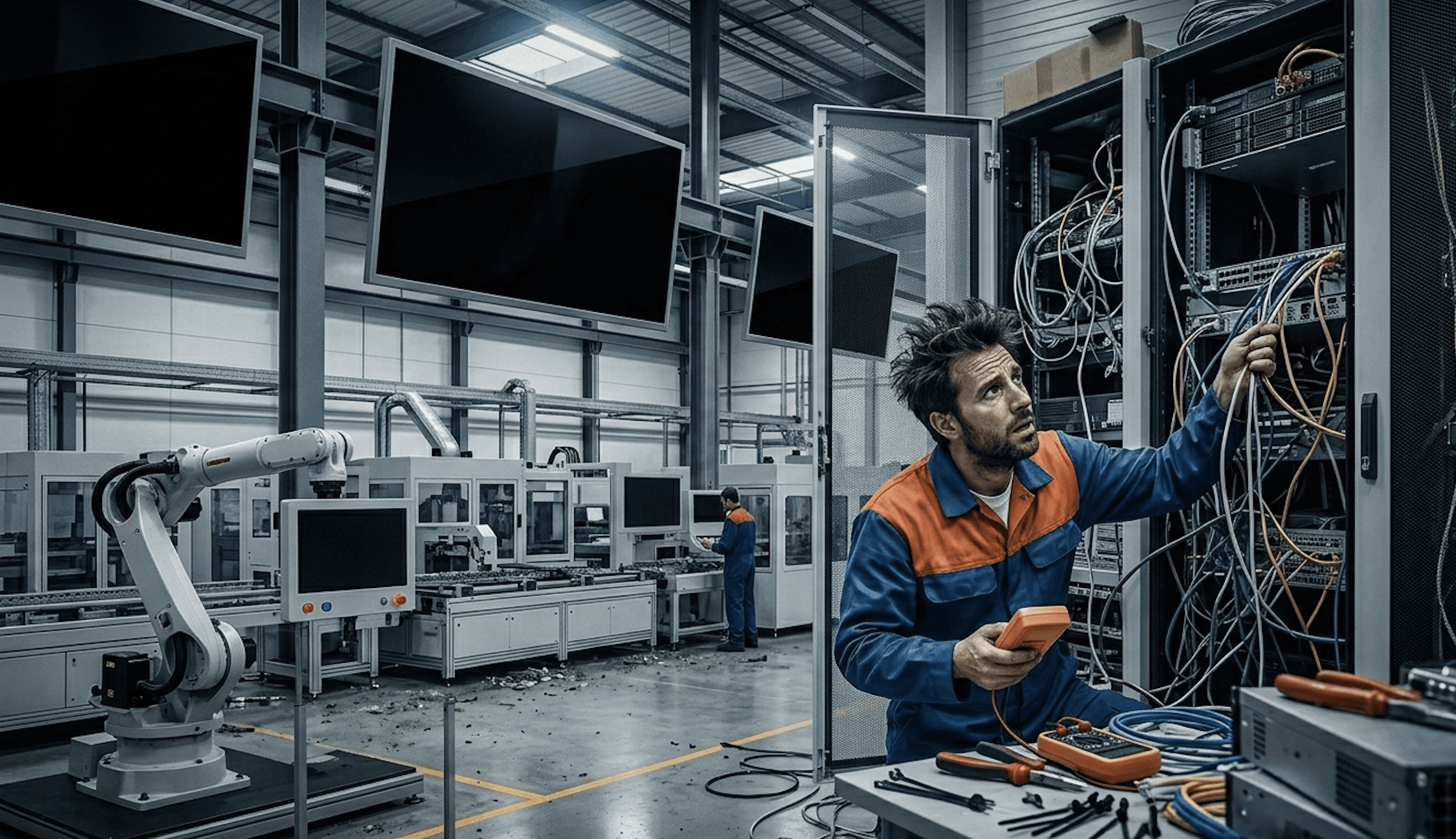
Your digital transformation has everything except results.
Your software still doesn't talk to your machines…
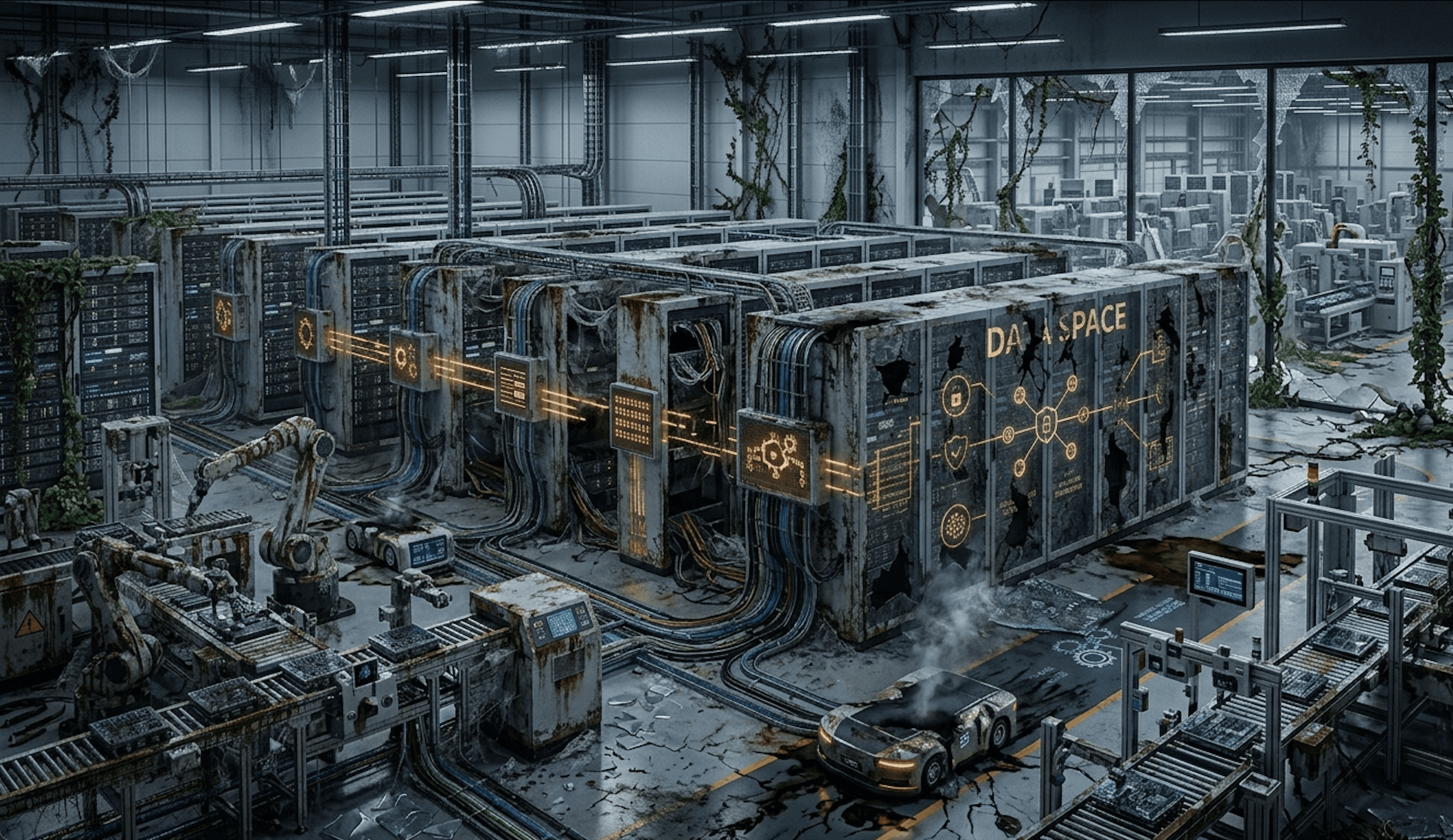
Data centralization
The illusion of control, the risk of decline…

53% of MCP servers are hacker nests
Have you given the keys to your company to the whole world?