
AKAWAN NEWSLETTER
Before leaving, let's stay in touch.
Once a month, receive practical insights from our AI and digital experts - covering use cases, real-world experiences, and trends - with no jargon, just useful ideas.
Your address remains confidential. You can unsubscribe at any time with a single click.
The deadly trap of industrial hyper-growth

The year 2026 confirms an unprecedented trend for the French high-tech industry: that of hyper-growth. Whether it is tier 1 and 2 aerospace suppliers, major players in the defense economy, pioneers of New Space, or manufacturers of high-end automotive, electronic, and medical components, the meters are spinning. Driven by bursting order books, many mid-sized companies and tech gems are recording dazzling growth ranging from +28% to +66% in their production volumes or revenue.
Yet, behind these dream figures celebrated in steering committees, an alarm signal is echoing in the workshops: current production tools and IT architectures can no longer keep up. Designed for a linear cruising speed, traditional Information Systems (IS) are saturating under the weight of this sudden ramp-up, threatening to turn a commercial triumph into an operational disaster.
1. Overheating alert: When your legacy software turns your record order book into an operational nightmare
When demand explodes in a matter of months, the weak links in the Information System break one after the other. This industrial shock translates into three major bottlenecks in the field.
Planning in times of crisis: the explosion of Excel sheets
Faced with order leaps exceeding 30%, the load calculation algorithms of legacy ERPs prove to be too rigid and unsuitable. To bypass the slowness or lack of flexibility of the central system, planners and workshop managers create dozens of "parallel" Excel files. The result? Machine capacity and supply data continuously fall out of sync. This shadow IT weakens decision-making and creates logistics gaps, even as end customers demand absolute punctuality.
The critical transition from industrial craftsmanship to mass production
Whether it is urgently doubling the annual production of powder and ammunition for European sovereignty, or moving from the prototyping phase to the commercial operation of nanosatellite constellations or surveillance drones, the challenge remains the same: automate and secure reliability. Manual processes or custom software developed five years ago cannot withstand the shock of high-cadence repeatability. Every erroneous manual entry on the production line triggers a chain reaction of non-conformities and machine stoppages.
The extended Supply Chain on the verge of breaking
An activity jump of more than +50% cannot be managed in isolation. It requires real-time monitoring of a complex ecosystem of subcontractors (surface treatment, precision machining, electronic boards). In the absence of modern collaborative portals and automated APIs to push purchasing forecasts, communication occurs through cluttered emails. Row material or component shortages block assembly lines, instantly ruining ramp-up efforts.
The technical observation: Trying to accelerate a factory whose IS relies on rigid and monolithic architectures is like pushing a city car engine to 200 km/h on the highway. The system will not just slow down; it will break mid-flight.
2. Crashing Excel sheets, bottlenecks, and general panic: The hidden cost of old-school scaling
The lack of architectural agility in the Information System (IS) immediately takes its toll both financially and operationally. A true symptom of an outdated IS, this rigidity puts operational flows under tension and directly impacts corporate margins and lead times.
This technological paralysis manifests itself first at the heart of scheduling and workshop monitoring: because production data is refreshed only once every 24 hoursu2014an obsolete batch modeu2014operations suffer from critical inertia. As a result, the organization is unable to react in real time to the slightest machine failure, which inevitably triggers cascading delivery delays.
The observation is equally damaging on the supply management side. The absence of real-time interconnection with the inventories of critical suppliers forces teams to navigate blindly. To compensate for this lack of visibility, the company swings between two extremes: defensive overstocking that heavily drains cash flow or, conversely, severe line outages that halt production instantly.
Finally, high-speed quality control also suffers from this disconnection. Manual entry of control reports and compliance certificates, still confined to paper or isolated local tools, causes an explosion in batch release times. This archaic processing creates a real administrative bottleneck at the end of the line, ruining overall operational efficiency.
3. The Akawan approach: how decoupling boosts your performance without the weight of a new ERP
To absorb a massive flow of orders without freezing operations through a heavy redesign of the central ERP, Akawan champions a pragmatic approach based on modern engineering and technological independence. The solution does not lie in frantically replacing your core software, but in their architectural decoupling.
Pillar 1: Decoupling monolithic architectures
Rather than waiting for the legacy ERP to laboriously process all factory requests, Akawan isolates critical production management functions. By implementing a service- or event-oriented architecture, we free the core IT system from heavy queries. Shop floor operators and machines access lightweight and ultra-fast applications, connected in real time, ensuring that no production line is slowed down by a loading computer screen.
Pillar 2: Implementation of API platforms and Data Hubs
To fluidify exchanges between the design office (which delivers new product plans at a forced pace) and the shop floor, Akawan designs API platforms and industrial Data Hubs. This modern exchange layer captures production, inventory, and quality data as soon as it is generated. Information flows instantly from one end of the chain to the other, automating the descent of manufacturing orders and the feedback of performance indicators, without double entry.
Pillar 3: Iterative modernization without downtime ("Lean IT")
Ramping up production cannot wait. Akawan's strategy, rooted in the principle of software craftsmanship, allows target-specific solutions (an agile scheduling module, an automated supplier flow) to be injected iteratively. Factories continue to produce 24/7 while the information system modernizes and adapts, brick by brick, to the new industrial scale.
4. The 3 essential architecture hacks to withstand a production boom without breaking everything
To succeed in this shift toward digital scaling in 2026, technical directorates must apply three rigorous principles:
Ban delayed data processing (Batches): Any key information flow (out of stock, breakdown, scrap) must be processed by event-driven architectures for immediate team reaction.
Sanctify master data: Automate synchronization between the design office (PLM) and the factory (ERP) to guarantee that production acceleration occurs exclusively on the very latest validated versions of products.
Open the IT system to the outside securely: Deploy secure APIs to connect strategic industrial partners, giving them direct visibility into your 3-to-6-month needs so they can size their own capacities.
Conclusion: No more blockages, make way for performance Make your IT system the ultimate weapon for your production ramp-up.
Achieving growth of +28% to +66% is a historic opportunity, but it acts as a ruthless revealer of an organization's weaknesses. Don't let obsolete software processes and rigid architectures sabotage your industrial performance. By choosing architectural decoupling, API interoperability, and modern data management, you transform your IT system into a production accelerator capable of absorbing any peak load, today and tomorrow.
About Akawan: An independent expert firm in information systems architecture, digital transformation, and agility, Akawan supports organizations in redesigning, urbanizing, and modernizing their software ecosystems. Thanks to a strong culture of engineering and craftsmanship, Akawan helps technical and industrial directorates leverage their business data and secure the long-term viability of their infrastructures.


The demonstrator who has never seen a cadence
If your AI pilots are not making it to production, the problem is not the AI

How many open houses in your workshop?
No one in the company knows the exact number…

The digital health record you don't have
The digital health record that your industry has never opened.

Multi-sites, zero visibility...
The nightmare of blind industrial management.

Industrial M&A: The Billion-Dollar Bug
IT architecture secretly dictates the success of your mergers

Successful merger, ERP in ruins
The true price of your redemptions…

Why 80% of factory mergers verge on a digital crash
and how to escape it…
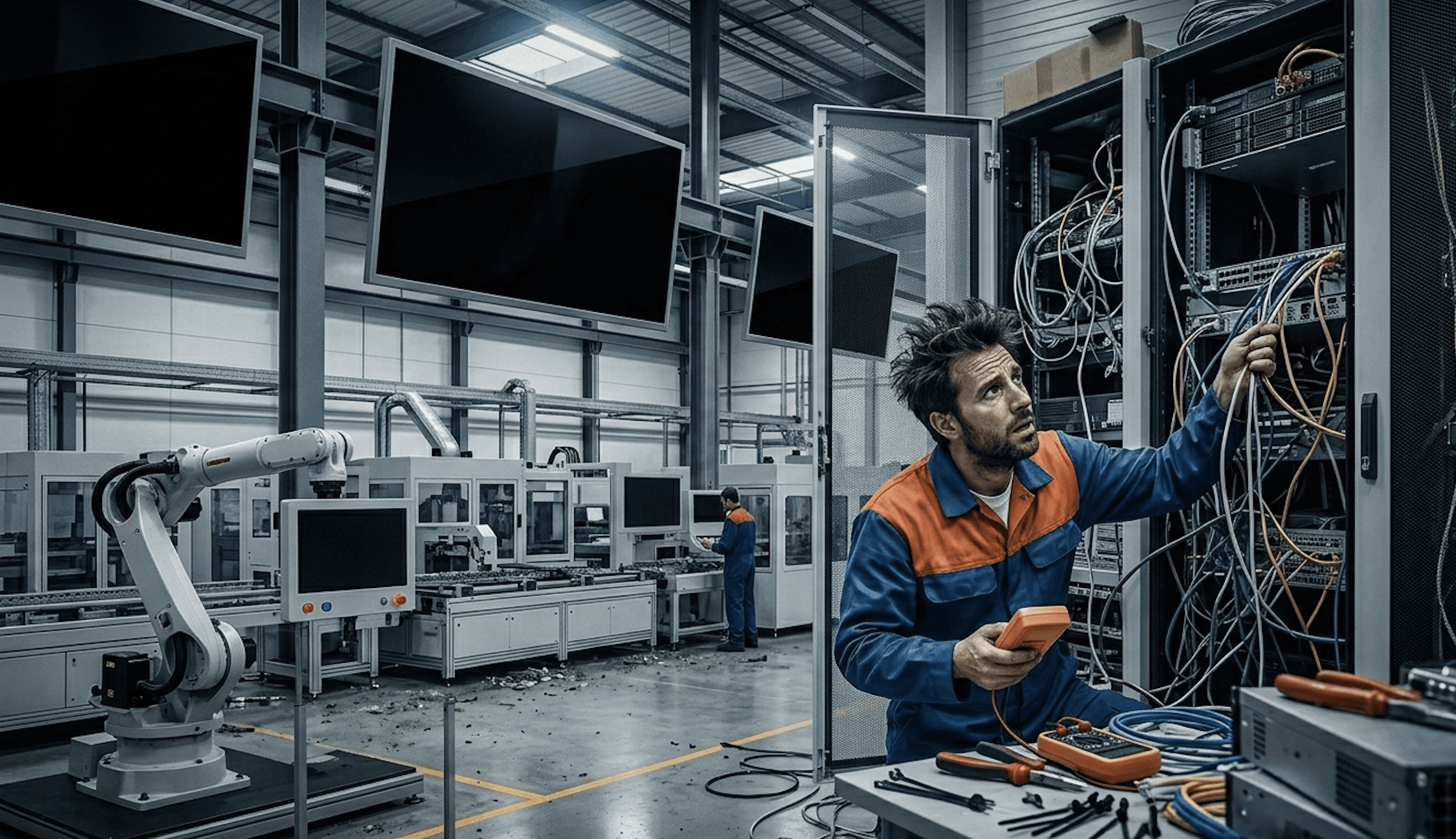
Your digital transformation has everything except results.
Your software still doesn't talk to your machines…
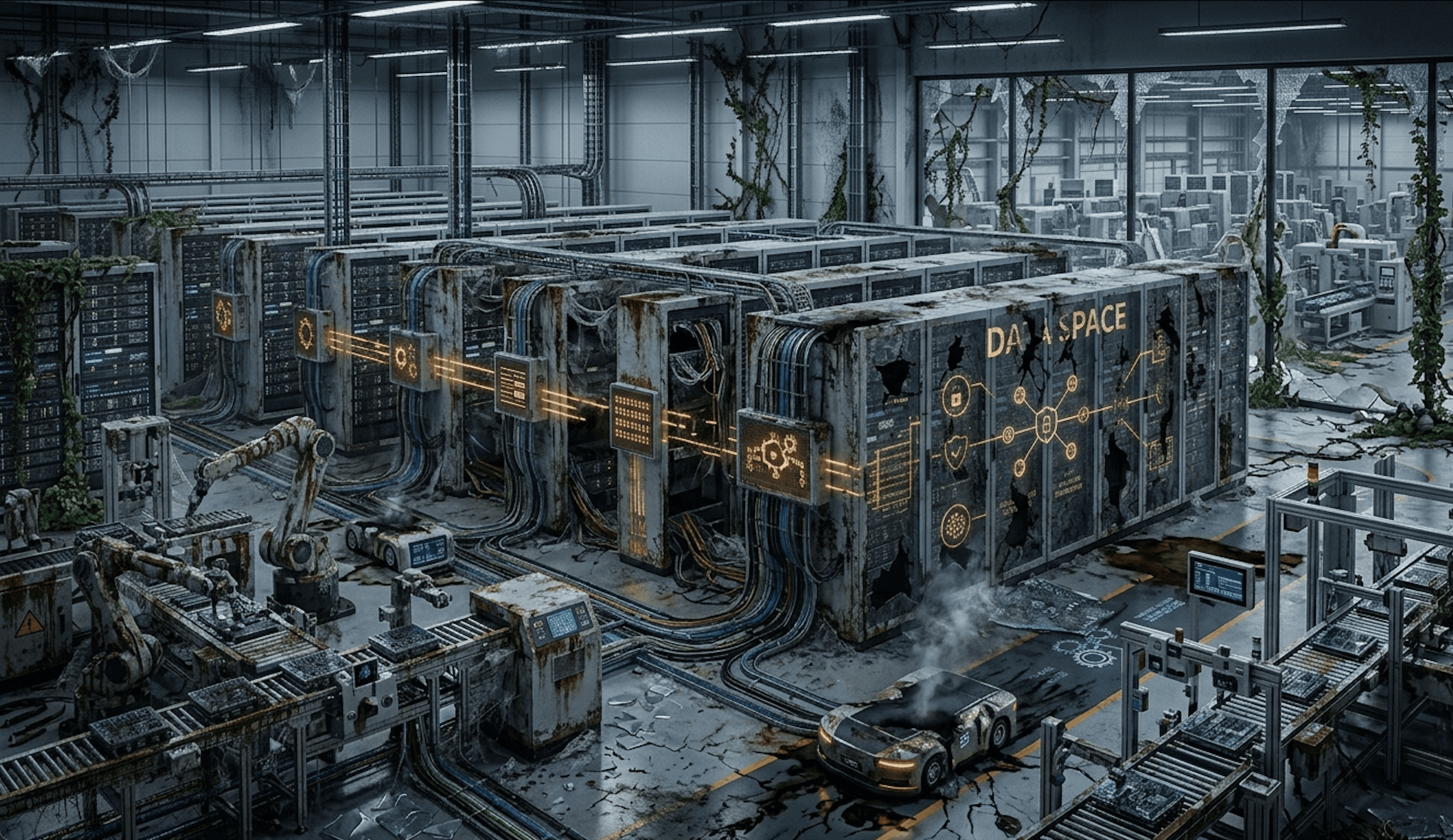
Data centralization
The illusion of control, the risk of decline…

53% of MCP servers are hacker nests
Have you given the keys to your company to the whole world?