
AKAWAN NEWSLETTER
Before leaving, let's stay in touch.
Once a month, receive practical insights from our AI and digital experts - covering use cases, real-world experiences, and trends - with no jargon, just useful ideas.
Your address remains confidential. You can unsubscribe at any time with a single click.
Your digital transformation has everything except results.
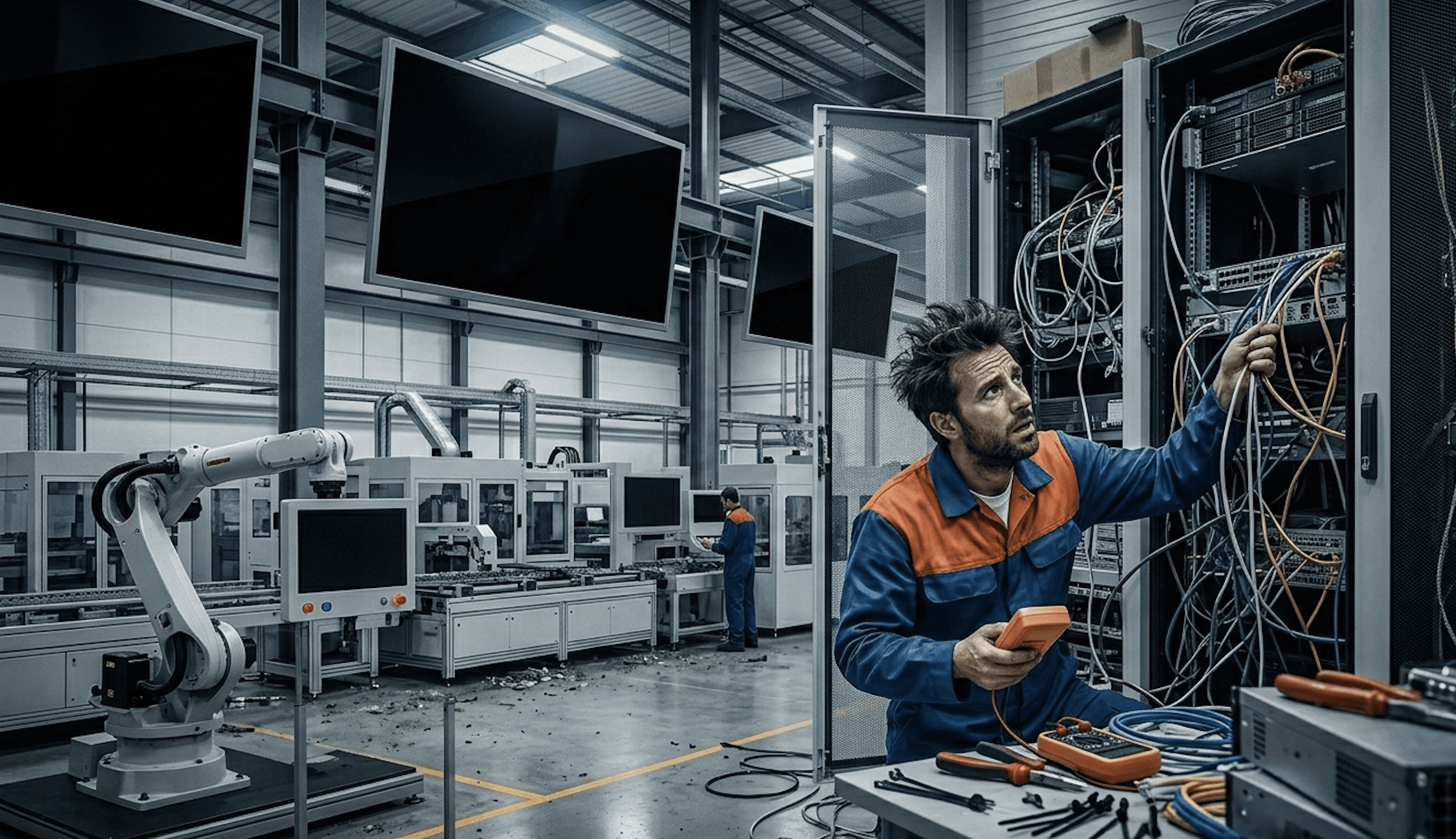
Your digital transformation plan has a name, a launch date, and a steering committee. It is missing one thing: results.
"Launching a major modernization program for our industrial IT is about getting a head start on our competitors." This has been the conviction held in most executive committees for the past three years. And today, it is the most underestimated strategic risk in your industry.
A head start is not gained on kickoff day. It is gained, or lost, in the 18 months that follow, when the ERP system still doesn't talk to the MES (Manufacturing Execution System), when the PLM remains a R&D silo, and when the shop floor teams continue to work on the same Excel files as before the program.
On September 12, 2025, the European Data Act came into force. In February 2025, the AI Act had already required companies to demonstrate control over their deployed digital systems. These two regulations arrive at the worst possible moment for manufacturers engaged in major transformation programs. They reveal, with uncomfortable precision, what your field teams already know: the program has been launched. The execution, however, is struggling.
A few figures to name what no one says in steering committee meetings:
70% of major industrial digital transformation programs do not achieve their initial objectives (McKinsey, 2023);
+45%: average budget overrun for complex IT programs in industry—not an exception, an average (McKinsey Global Institute);
18 months: average delay observed in IT modernization projects in French industry compared to the schedule validated in steering committees (Bpifrance Le Lab, 2024);
Only 29% of technology projects are completed on time and within budget (Standish Group CHAOS Report, 2023);
$160 billion: size of the global ERP market in 2024, of which manufacturing represents the largest segment and the one with the highest integration failure rates (IDC, 2024);
25%: production delay in the French aerospace sector at the end of 2024 compared to pre-crisis levels, even as Airbus rates increase by 10 to 15% per year (Xerfi, 2025)—a gap that closes directly on subcontractors who have not modernized their management tools.
These programs do not come from nowhere. They have names. They have been presented to the board. Budgets have been committed. Consultancy firms have delivered their scoping deliverables. And yet, in the field, PLCs do not always send data to the ERP, the digital thread does not cross the workshop door, and traceability data continues to be entered manually in your customers' portals.
The real question is not: did this program make sense?
The real question is: why does the ERP still not talk to your machines?
While the program is theorized in the meeting room, production remains prisoner to the raw complexity of the field.
Today, the trajectory of major IT modernization programs in manufacturing has become sadly predictable. An ERP or PLM vendor selected after 6 months of benchmarking. An integrator mobilized. Well-conducted configuration workshops. And, twelve to eighteen months later, a discrepancy that is hard to articulate in steering committees: production teams continue to work in parallel on the old systems. The MES supposed to collect machine data was never connected to the PLCs. The PLM was deployed on the engineering office side, but the link with the workshop, the digital thread from the bill of materials to the manufacturing order, was never pulled. And the traceability reporting required by your prime contractors—EN 9100, PART 21, PART 145 for aerospace, ISO standards for medical, manufacturer requirements for automotive and heavy transport—continues to be produced manually, at a high human cost.
This is not a software selection issue. This is not a management will issue.
It is a foundation issue. The program was built on a vision of the target. Not on actual mastery of the starting point: what your existing systems really do, how your machines communicate (or do not communicate) with your IT, and what your prime contractors will ask of you in 24 months.
McKinsey documented it across 1,700 programs: failure is never in the software.
The McKinsey Global Institute analysis of more than 1,700 transformation programs in the industrial world is clear: if 70% of programs fail to meet their objectives, it is almost never for technological reasons. It is architectural: poorly mapped application landscape, undocumented OT flows, production data scattered across systems that do not talk to each other, IT and OT teams operating under incompatible logics, program governance too light for the real complexity of shop-floor integration.
Result: the new digital layer: ERP, MES, PLM, only makes worse what the organization had not resolved before launching the program. Silos do not disappear because you bought a tool meant to erase them. They move, and they cost more.
In the aerospace sector, many SMEs and mid-sized companies still use manual tools: Excel, PowerPoint, to prepare their schedules, creating error risks and an inability to automate exchanges with their customers. This is not because they lack the will to modernize. It is because they lack a solid integration foundation.
A modernization program does not modernize an environment it does not understand.
Four blind spots that derail programs, always the same ones, never addressed together.
Industrial information system modernization programs systematically run into the same sticking points. Each belongs to a different stakeholder. None is ever handled simultaneously:
The real shop-floor mapping: Which PLCs, which machines, which communication protocols are actually in production today? In almost all cases, this mapping does not exist when the program starts, or it dates back 4 years and no longer matches anything.
The end-to-end digital thread: How can quality, traceability or configuration information be moved from the engineering office to the delivered part, without manual re-entry at every step? This is the core problem for any industrial company subject to EN 9100, PART 21 or OEM standards. Digital continuity is essential to guarantee complete traceability from raw material to final operations, while complying with PART 21 and PART 145 regulations. Yet this continuity cannot be bought with an ERP. It is built layer by layer, from the machine up to the information system.
The growing demands of your customers: Airbus, with its Decade-X initiative, already requires its suppliers to share production data in a structured and traceable way within a certified digital-sovereignty framework. EDF and Airbus now require a level "European Control" in their tenders, immune to extraterritorial laws. Being unable to meet this within the next 24 months means gradually being excluded from bids.
Governance of industrial software licenses: CATIA, DELMIA, Simufact, the simulation and CAD tools that keep your engineering offices running cost several million euros a year. In almost all industrial companies, no one knows in real time how many seats are active, where, by whom, or whether usage matches the license contracts. It is a silent budget bomb that information system modernization systematically wakes up.
No ERP vendor, no conventional integrator, can guarantee simultaneous mastery of these four dimensions. This is not a value judgment. It is a structural constraint: their solutions were designed for homogeneous environments, not for heterogeneous industrial ecosystems operating under cadence pressure.
What the sectors have begun to understand: information system modernization cannot be decreed from a project office.
The concentration of activity around a few major customers creates a strategic dependency for subcontractors. This dependency is now also expressed in digital terms: suppliers who cannot automatically feed quality portals, who cannot produce digital traceability files on demand, who cannot connect their production lines to sector data-exchange standards, are gradually being repositioned among the less strategic tiers of suppliers.
A shared digital thread is now what guarantees traceability, configuration management and real-time deviation control between customer and subcontractor. It is no longer an advanced modernization option. It is a prerequisite for entering new bids.
The same logic applies in heavy transport and industrial logistics, where manufacturers are gradually incorporating digital reporting requirements into their supplier contracts, and in medical devices, where regulatory traceability requires a continuous digital chain from raw material to batch record.
Programs that deliver on their commitments all have one thing in common: they started by making their environment readable and interoperable before attaching tools to it. They did not stack a MES on top of a shop floor they did not control.
Equipment manufacturers, tier-1 and tier-2 subcontractors: you are not too small for these issues. But you are already behind your customers' schedule.
The temptation is to think that information system modernization at this level of complexity concerns large groups, not a manufacturing mid-sized company of 300 to 800 people acting as a tier-1 or tier-2 subcontractor. That is a strategic misreading that is paid for when contracts come up for renewal.
According to Bpifrance Le Lab, 43% of SME and mid-sized company executives have already launched a formalized digital transformation effort. That means 57% are still navigating in a scattered way, testing tools without an overall architecture, with the MES not talking to the ERP and the PLM not talking to the shop floor. In most cases, these tools create additional integration debt. Not deliverable traceability.
But let us be realistic: executing an information system modernization program in a constrained industrial environment is today an operational wall. OT flow mapping, machine-ERP-MES integration, PLM-to-shop-floor digital thread, governance of industrial licenses, EN 9100 / PART 21 traceability, Data Act compliance, connection to customer supplier portals, preparation for sector dataspaces…
For a large group with a structured IT department, this is a multi-year program with 20 dedicated resources. For a mid-sized company or an industrial subcontractor, it is a wall impossible to cross alone, especially when production cadence is increasing at the same time.
This is precisely the problem akawan decided to tackle.
akawan today: real execution, not an extra roadmap.
akawan is not a consultancy that produces master plans. akawan is an industrial digital transformation execution player, created from the outset for constrained and heterogeneous environments: aerospace, defense, manufacturing, transport, medical, sovereign public sector.
What akawan delivers now, in production at its customers:
Active mapping of OT flows and the information system landscape: real identification of systems in production, active machine protocols, undocumented flows, without waiting for a 6-month audit mission before being able to start;
OT/IT integration without infrastructure redesign: connection of PLCs, sensors and production lines to ERP/MES/PLM layers, without interrupting operations and without changing your existing OT networks;
Operational digital thread: flow of data from engineering office to shop floor, batch and configuration traceability, automatic feeding of your customers' quality portals;
Integrated LicenGuard module: governance and real-time control of industrial software licenses: FlexLM, DSLS, RLM, Sentinel RMS, so as no longer to violate the vendor's rules and expose yourself to the risk of significant fines;
Program execution management: proven method for managing industrial information system transition phases, combining architect-level rigor and field pragmatism;
Native security posture: Zero Trust applied to M2M flows and inter-system exchanges from the design stage, in line with your customers' digital-sovereignty requirements.
Concretely, you can regain control of your modernization program without throwing away your existing infrastructure, without hiring an internal integration team, without starting a scoping phase over again.
akawan in 2027: when your industrial information system joins sector digital ecosystems.
The next step, already underway in R&D, has a clear objective: to allow an equipment manufacturer or industrial subcontractor to execute its information system modernization program and connect to sector dataspaces, without bearing the technical complexity of both alone.
What akawan will add by 2027:
Native dataspace connector, compatible with Eclipse Dataspace Connector (EDC) and compliant with IDSA specifications, to integrate into sector initiatives such as Decade-X (aerospace) or Catena-X (automotive) without custom development;
Real-time program execution dashboard: physical progress, committed spending, integration risks automatically detected from system flows, not manual reporting;
Verifiable identity management (SSI) based on W3C Verifiable Credentials standards, to authenticate each participant in sector exchanges and meet the requirements of the "European Control" level;
Fine-grained governance of usage contracts: who can do what with which production data, for how long, under which contractual conditions, aligned with Data Act requirements;
End-to-end traceability with turnkey auditor export, compliant with EN 9100, PART 21 and AI Act;
Simplified onboarding to sector portals, with pre-configured connectors for the main exchange formats of aerospace, automotive and heavy-transport customers.
The guiding idea does not change: your program belongs to you. Your production data stays with you. Integration into the digital ecosystems of your customers becomes a controlled choice, not a constraint imposed by lack of architecture.
70% of industrial information system modernization programs do not meet their objectives. The question is not whether your program was well designed. It is whether, in 18 months, your ERP talks to your machines, your digital thread holds end to end, and your customers find you in their portals, or whether you start a new program to fix the previous one.


The demonstrator who has never seen a cadence
If your AI pilots are not making it to production, the problem is not the AI

How many open houses in your workshop?
No one in the company knows the exact number…

The digital health record you don't have
The digital health record that your industry has never opened.

Multi-sites, zero visibility...
The nightmare of blind industrial management.

Industrial M&A: The Billion-Dollar Bug
IT architecture secretly dictates the success of your mergers

Successful merger, ERP in ruins
The true price of your redemptions…

Why 80% of factory mergers verge on a digital crash
and how to escape it…

The deadly trap of industrial hyper-growth
+28% to +66% in cadence…
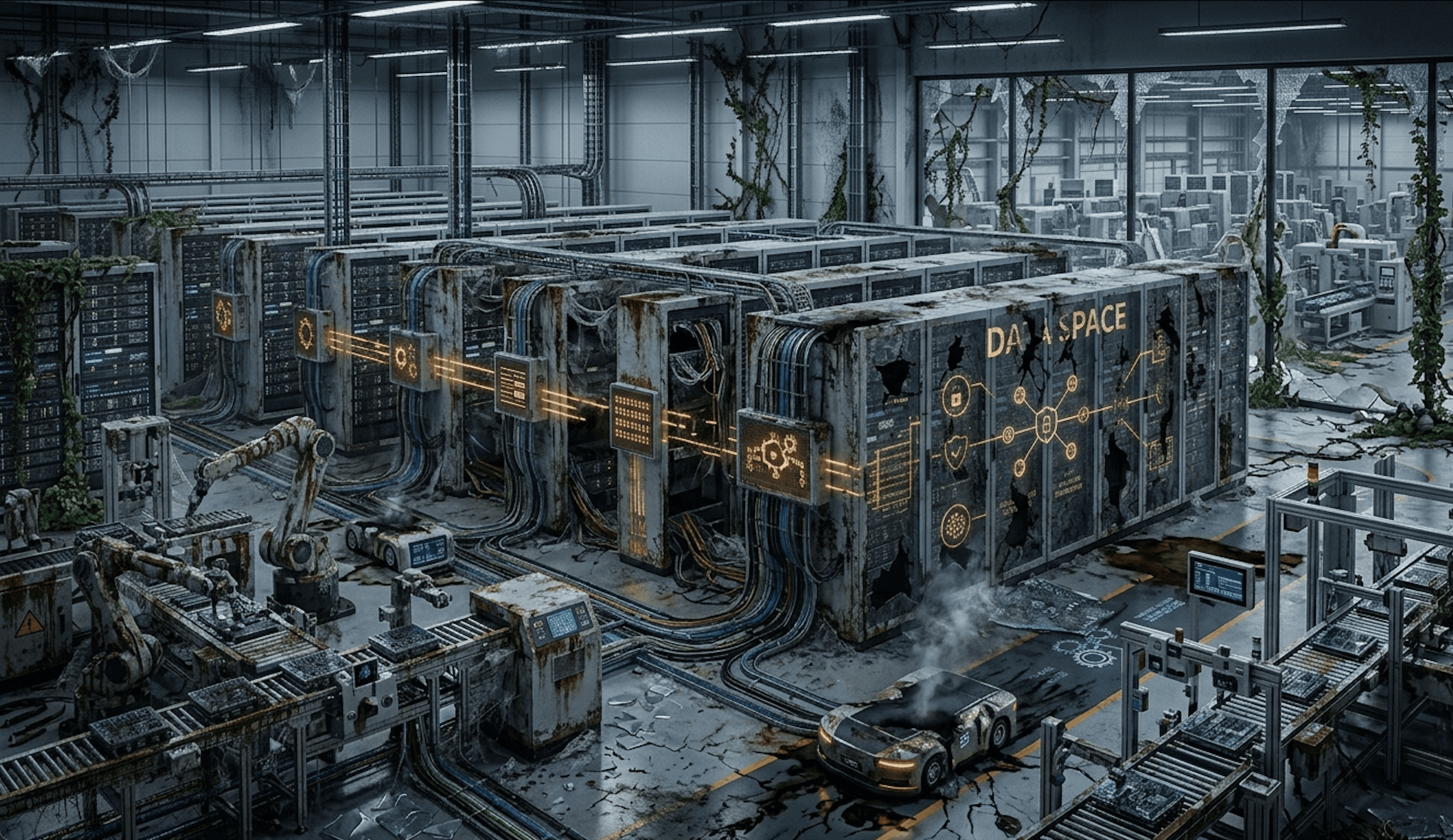
Data centralization
The illusion of control, the risk of decline…
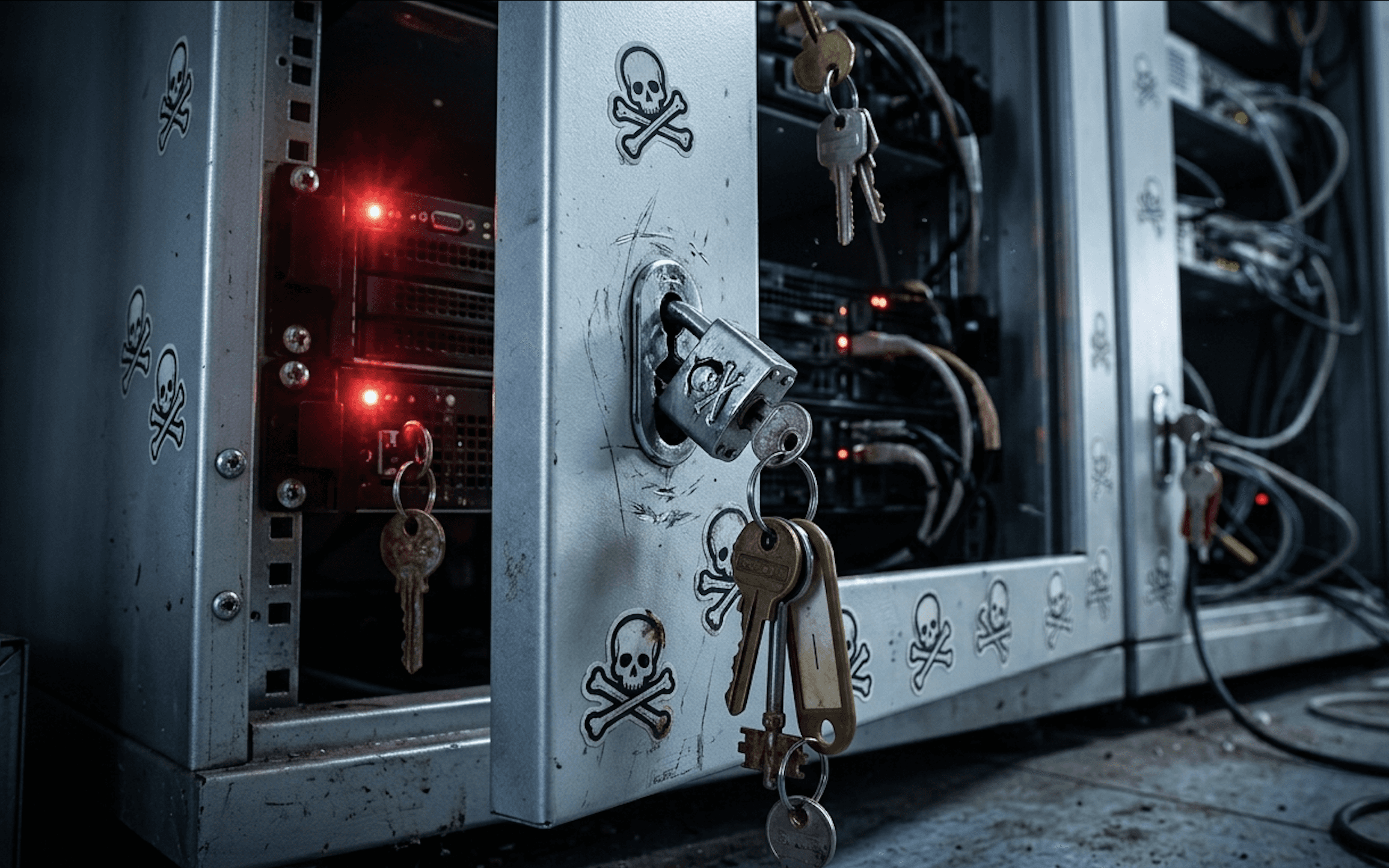
53% of MCP servers are hacker nests
Have you given the keys to your company to the whole world?