
AKAWAN NEWSLETTER
Before leaving, let's stay in touch.
Once a month, receive practical insights from our AI and digital experts - covering use cases, real-world experiences, and trends - with no jargon, just useful ideas.
Your address remains confidential. You can unsubscribe at any time with a single click.
Industrial M&A: The Billion-Dollar Bug

In an industrial landscape marked by record consolidation in 2025 and 2026, confirmed by economic updates from GIFAS, mergers and acquisitions have become the ultimate weapon to rapidly capture production capacities. Yet, the reality of post-merger figures is unforgiving. Macroeconomic studies show that 70% to 90% of mergers fail to generate the announced financial synergies, with the poor integration of information systems cited as the primary cause of this disaster.
After analyzing the operational incompatibility of the ERP-PLM-Quality trio in our "Article: Why 80% of Factory Mergers Teeter on the Edge of a Digital Crash" and the direct impact of siloed financial flows within ERPs in our Article: Successful Merger, Shattered ERP", a comprehensive overview is essential. The real challenge lies in the post-merger integration (PMI) methodology itself applied to software architectures.
1. The PMI Paradox: When Financial Speed Collides with Technical Rigidity
When acquiring a factory, investors demand immediate results. This short-term pressure often pushes executive boards to make a major strategic mistake: confusing managerial integration with brutal and global software standardization.
Imposing a single system from day one halts production lines and causes an operational stroke. Market data indicates that ERP migration projects carried out in a rush after a merger exceed their initial budget by an average of 56% and extend deadlines by 42%.
Conversely, letting acquired factories operate in complete autarky creates total opacity. The scale effect evaporates, raw material purchases are not consolidated, and the group loses the agility promised to customers.
The success of a merger therefore does not depend on the choice of a single software package, but on the agility of the integration trajectory.
2. Financial, Technical, and Logistic Flows: The Hard Numbers on Integration Roadblocks
To understand the impact of a poorly calibrated software trajectory, one must look at the reality of the data flows feeding your sites:
The Cost of Financial Silos: As demonstrated in our ERP-specific analysis (Article: Successful Merger, Shattered ERP), the absence of a common codification prevents any visibility into consolidated stocks. The cash impact is immediate because the group is unable to consolidate its purchasing volumes.
The Drift of Technical Flows: When central R&D and remote factories do not share the same PLM workflows, as highlighted in our "Article: Why 80% of Factory Mergers Teeter on the Edge of a Digital Crash", Time-to-Market explodes. The scrap rate associated with manufacturing parts based on obsolete designs can increase by 15% to 20% in the first post-merger months.
Regulatory and Quality Risk: In aerospace or defense (EN 9100 standards), fragmented traceability multiplies the resolution time of a production anomaly tenfold. A single failed client audit due to scattered data can suspend a major contract.
3. IT Urbanization by Akawan: The Orchestrator of Your Post-Merger Integration
To align the pace of finance with that of the factories without risking an industrial blackout, Akawan applies the principles of agile urbanization of information systems:
Axis 1: Immediate semantic alignment. Before merging servers, Akawan enforces a common grammar via Master Data Management (MDM). Whether it is an article or a bill of materials (MBOM), every entity must speak the same language.
Axis 2: Integration by technological stages. Akawan designs modern interoperability layers (APIs & Data Hubs). Instead of replacing existing systems, we connect tools intelligently. Information transits in a filtered manner so as not to overload the systems. You obtain 360-degree visibility without disrupting the day-to-day operations of the operators.
Axis 3: Iterative rationalization driven by value. Global software unification remains a long-term target. Akawan plans migration waves based exclusively on real business value, prioritizing sites that present the strongest synergies or the highest risks.
4. The "Commando" Method: Key Success Factors of a Successful PMI
The success of the integration relies only 30% on technique. The remaining 70% depends on rigorous governance:
Transversal and decision-making steering: Taking the project out of the hands of the IT department alone to integrate the Industrial Director, R&D, and quality management within a single committee.
Surgical respect for local specificities: Standardizing only mandatory flows: financial reporting, quality indicators, and preserving essential local operational agility.
Pragmatic change management: Relieving teams on the ground by demonstrating to them that interoperability eliminates double manual entry and corrupted Excel files.
Conclusion: Securing the Foundation to Build an Industrial Empire
An ambitious acquisition strategy without a clear IT architecture vision is a financial illusion. By relying on pragmatic and modular software urbanization, general management and IT departments secure the execution of their integration. Information systems cease to be an operational drag to become the industrial catalyst of your growth.
About Akawan
Akawan supports organizations in the redesign, urbanization, and modernization of your software ecosystem. Thanks to a strong culture of engineering and "craftsmanship", we help technical and industrial departments leverage their business data and sustain their infrastructure.


The demonstrator who has never seen a cadence
If your AI pilots are not making it to production, the problem is not the AI

How many open houses in your workshop?
No one in the company knows the exact number…

The digital health record you don't have
The digital health record that your industry has never opened.

Multi-sites, zero visibility...
The nightmare of blind industrial management.

Successful merger, ERP in ruins
The true price of your redemptions…

Why 80% of factory mergers verge on a digital crash
and how to escape it…

The deadly trap of industrial hyper-growth
+28% to +66% in cadence…

Your digital transformation has everything except results.
Your software still doesn't talk to your machines…
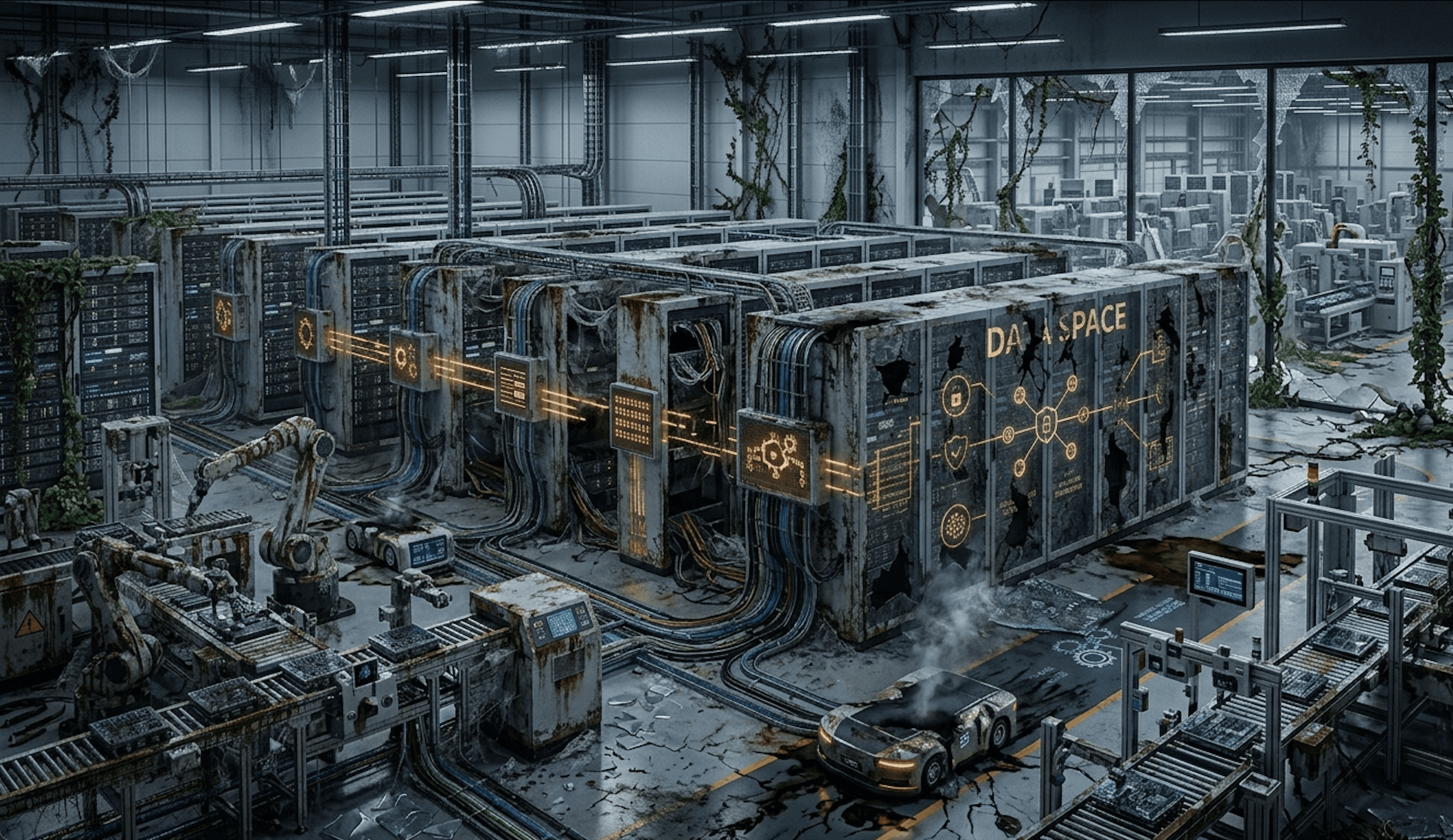
Data centralization
The illusion of control, the risk of decline…

53% of MCP servers are hacker nests
Have you given the keys to your company to the whole world?